Why fall in Arizona still leaves you dehydrated (and what to do about it)
September 27, 2026 · 8 min read · By the nurses of Nurse Line Infusion
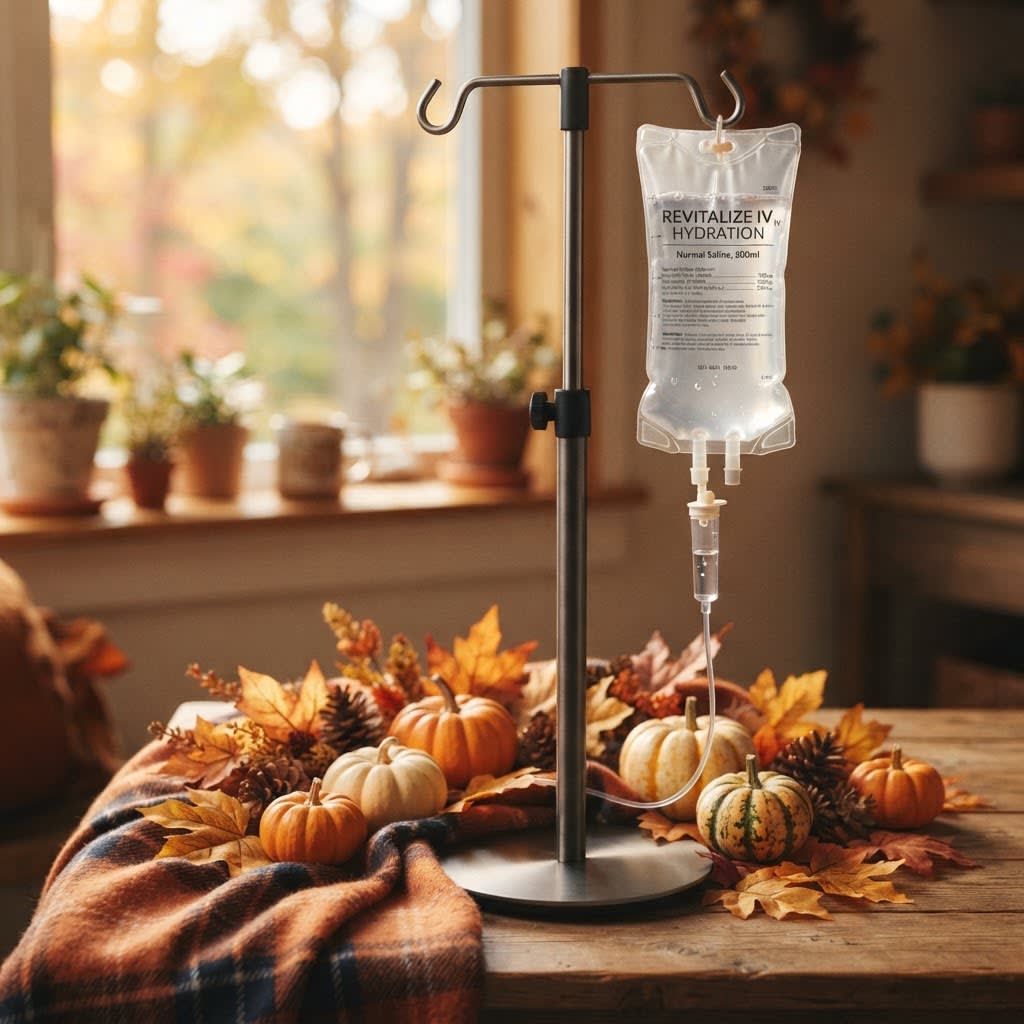
The first cool mornings arrive in the East Valley, the water bottle gets left in the car, and something strange happens: people who carefully hydrated all summer start showing up drained, headachy and run down in weather that feels harmless. As nurses, we see it every October. Here's what autumn is actually doing to your body — and how to stay ahead of it.
Cooler weather doesn't end dehydration — it hides it
It sounds backwards, but the research on cold-weather dehydration is consistent: your thirst response dulls when temperatures drop. As blood vessels constrict to conserve warmth, your brain registers fluid needs less urgently, so you simply don't feel like drinking — even when your body is running low.
Meanwhile, the losses continue. Every exhale in cool, dry air carries water vapor out of your body — that visible morning breath is fluid leaving in real time. Cold weather also triggers what physiologists call cold-induced diuresis: constricted blood vessels raise central blood pressure, and your kidneys respond by producing more urine. Add Arizona's persistently dry air and the switch from air conditioning to heating, which strips even more moisture from your indoor environment and your airways, and your fluid deficit quietly grows all season.
The result is the pattern we see every fall: people drink less because they're less thirsty, lose more through breathing, heating and urination, and blame the fatigue on being 'busy' — when dehydration is doing half the work.
Fall is the East Valley's outdoor season — and your sweat doesn't stop
When summer's triple-digit afternoons finally break, the Valley comes alive. Hiking trails around Usery Mountain and the Superstitions fill up, golf tees off all day, and youth sports move into full swing with multi-game weekend tournaments. After hiding from the heat for months, everyone heads outdoors at once.
Here's the catch: the same dry desert air is still pulling moisture off your skin — it just evaporates so fast you never see it or feel it. You'll finish a morning hike or a couple of hours on the course significantly more depleted than you realize, and because it's 75 degrees instead of 110, your water intake rarely matches the effort.
Fall is also when the Valley welcomes its seasonal residents. If you're a snowbird arriving after a long travel day — or a local flying out and back for the holidays — the combination of air travel, jet lag, disrupted sleep and restaurant food is a classic recipe for arriving (or returning) depleted.
Flu season changes what dehydration costs you
Cold and flu season ramps up as the weather cools, and it collides directly with fall's hidden dehydration problem. When you're getting sick, hydration matters more than usual: your airways' natural defenses depend on moist mucous membranes, and fever, congestion and mouth-breathing all pull fluid out of you faster than normal. Being low on fluids makes the fatigue, headache and brain fog of illness worse.
Dehydration also blunts your energy precisely when you need it to fight something off — your immune system's cells travel in your blood volume, and reduced fluid means reduced circulation and slower delivery of the resources your body uses to mount a defense.
The practical takeaway: by the time you're sick, you're usually behind on fluids. Catching up orally when you have no appetite, a sore throat or nausea is slow and unpleasant — which is exactly the gap an IV is designed to close.
Behind on fluids?
A licensed RN can bring a hydration infusion to your home, office or hotel anywhere in the East Valley — often the same day.
Immune-supporting IVs: what they can do, and what they can't
Let's be straight with you, the way a nurse should: an IV is not a cure for a cold or flu, and no vitamin drip guarantees you won't catch what's going around the office. Anyone who promises that is overselling.
What IV therapy genuinely does well is fast rehydration — delivering fluids and electrolytes straight into your bloodstream, bypassing a digestive system that may be unhappy, slow, or limited in what it absorbs. That benefit is well established. Our immune-supporting formulations also include nutrients like vitamin C, B vitamins and zinc at concentrations oral supplements can't reach; vitamin C in particular supports white blood cell function and has been shown to modestly reduce the severity and duration of colds in people under physical stress. Think of it as giving your body's existing defenses better supply lines — not a force field.
When clients feel a cold coming on and want to shorten the miserable part, a hydration infusion with immune-supporting nutrients is a reasonable, nurse-screened option — best used early, alongside the basics: rest, fluids, and your doctor's advice if symptoms escalate.
Your fall calendar is a dehydration machine
Look at the season as a whole and the pattern is hard to miss:
- Outdoor season: hiking, golf, and youth-sports weekends with unnoticed sweat losses
- Travel and snowbird arrival: flights, jet lag and disrupted routines that drain you
- Cold and flu season: fever, congestion and poor intake that deepen existing deficits
- The holidays: hosting, late nights, celebratory weekends and less sleep than usual
- Back-to-school germs: parents catch whatever the kids bring home, on top of being rundown
Every one of these is a moment when your body needs to catch up faster than a water bottle can manage. That's the real role IV therapy plays in autumn — not replacing daily habits, but closing the gap when fall life outruns them.
When an IV makes sense this fall
Consider booking a visit when:
- You feel a cold coming on and want to support your body early with fluids and immune nutrients
- You're recovering from the flu or a stomach bug and can't keep enough fluids down
- A big outdoor weekend — a tournament, a long hike, a golf trip — has you feeling drained
- Travel has you jet-lagged and depleted, or a visiting family member arrives wiped out
- The holidays have you run down and you can't afford a slow week
Every visit starts with a health screening by a licensed registered nurse who reviews your history before any infusion. If an IV isn't the right choice for your situation, we'll tell you that too.
What a Nurse Line visit looks like
When you book, a licensed registered nurse comes to your home, office, hotel or vacation rental anywhere in the East Valley — San Tan Valley, Queen Creek, Gilbert, Chandler, Mesa, Tempe and Scottsdale. After the health screening, your nurse places the IV, monitors you throughout the session and removes it before leaving. Most visits take under an hour, and same-day and weekend appointments are available — useful when a cold catches you off guard on a Friday.
The bottom line
Fall in Arizona is the best season of the year — and it quietly dehydrates you the whole way through. Keep drinking water daily, watch your intake on outdoor and travel days, and when the season gets ahead of you — illness, exertion or a packed calendar — a nurse-administered IV is the fastest way back to baseline. Have questions about whether an immune-supporting infusion fits your fall? Book online or reach out, and a nurse will talk it through with you first.
Frequently asked questions
Can you really get dehydrated when it's not hot out?
Yes — and it often goes unnoticed precisely because you don't feel thirsty. In cooler weather your thirst response dulls, breathing dry air pulls moisture out with every exhale, and cold exposure increases urine production. Many people enter fall and winter with a chronic low-grade fluid deficit they never notice until it shows up as fatigue or headaches.
Can an IV vitamin drip prevent me from catching a cold?
No infusion guarantees you won't catch a cold, and we won't pretend otherwise. What immune-supporting IVs do is rapidly rehydrate you and deliver nutrients like vitamin C and zinc at full concentration to support your body's natural defenses — which is most useful early in an illness or when you're run down, alongside rest and your doctor's guidance.
I'm already sick with a cold or the flu. Is an IV still worth it?
Often, yes — illness is one of the most common reasons clients book. Fever, congestion and poor intake usually leave you behind on fluids, and an IV rehydrates you directly without relying on your stomach. Every visit starts with a nurse health screening, and IV therapy supports recovery but does not treat the illness itself — if symptoms are severe or worsening, see your doctor or urgent care first.
How often can I get a hydration or immune IV during fall and winter?
It depends on your health history, which is why every visit starts with a screening. Some healthy clients book an immune-supporting infusion at the start of flu season and occasional recovery infusions after travel, big events or illness; others come weekly during heavy training blocks. Your nurse will recommend what's appropriate for you.
Feel better, fast
Book online and a licensed registered nurse brings the fluids, vitamins and medications to you — usually in under an hour.